
Oral Torah: How Israel Lived the Written Torah and Why Mark 7 Matters
By Enedina Guerrero When Christians hear the term “Oral Torah” (or “Oral Law”), they’re either unfamiliar with what it is, or they assume or were taught that it’s a collection…
By Enedina Guerrero When Christians hear the term “Oral Torah” (or “Oral Law”), they’re either unfamiliar with what it is, or they assume or were taught that it’s a collection…

BY ENEDINA GUERRERO Chanukkah isn't in the Torah. You won't find its observance commanded alongside the seven Appointed Times listed in Leviticus 23 or Numbers 28–29. Yet this eight-day celebration…

By Enedina Guerrero With December finally here, preparations for Christmas have gone into full swing—hanging lights, buying gifts, participating in local activities, and planning festive meals for office or community…

The Appointed Times are G-d's way of marking redemptive history. These divine appointments reveal G-d's character and His plan for humanity.

The smell of albondigas — Sephardic meatballs with peas and artichoke hearts — diffuses through our kitchen but not through our home, as it usually does. This year, the single pot my mother is cooking will suffice. One pot will feed six, with leftovers for tomorrow’s lunch. Four pots feed 18 people, leaving a few Tupperwares to freeze.
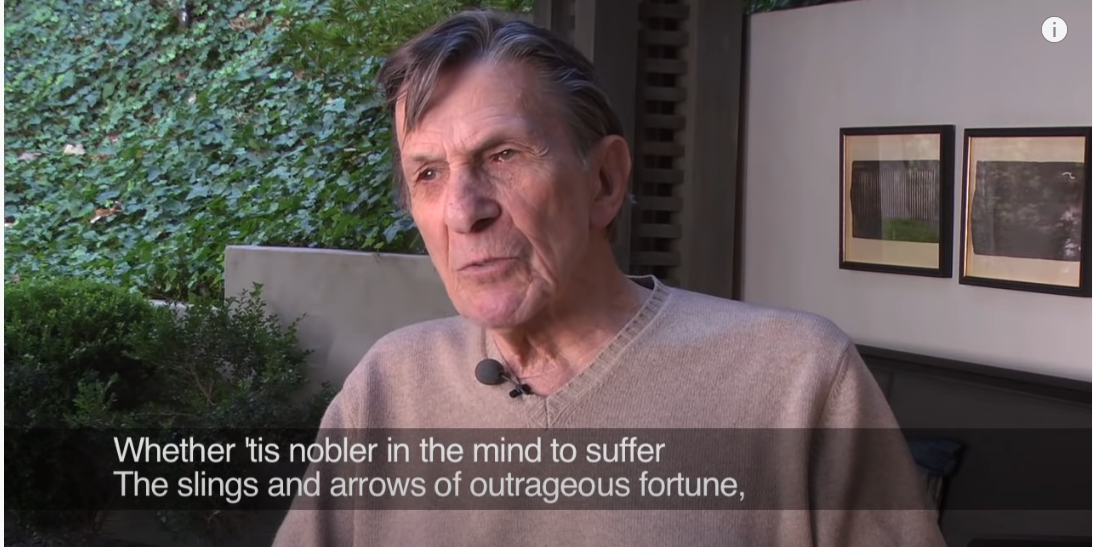
Leonard Nimoy - Jewish actor most well-known for his role as Spock on the Star Trek science fiction series - was interviewed by Christa Whitney in Los Angeles, California on October 15, 2013. Parts of this interview are in Yiddish, subtitled in English.

We believe in the biblical principle of restoration. God made everything in the world “very good” (Genesis 1:31). Yet, Adam's sin and Satan's rebellion caused much destruction. God's plan of redemption not only saves us from damnation,
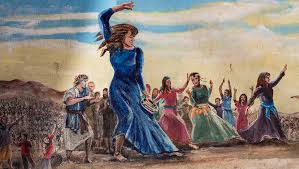
The Old Testament is the first part of the Bible, and so we must turn to this in order to understand the role of dance in Jewish culture. There are twenty-two references to dance in the Old Testament,
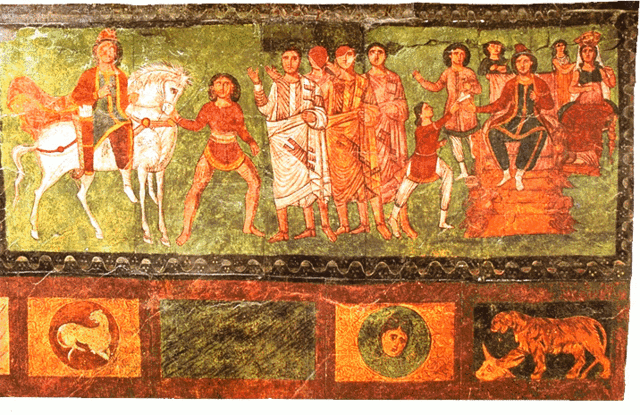
The Second Commandment and Its Interpretations The Second Commandment, as noted in the Old Testament, warns all followers of the Hebrew god Yahweh, “Thou shalt not make unto thee any graven image.” As most Rabbinical authorities interpreted this commandment as the prohibition of visual art, Jewish artists were relatively rare until they lived in assimilated European communities beginning in the late eighteenth century. Although no single biblical passage contains a complete definition of idolatry , the subject is addressed in numerous passages, so that idolatry may be summarized as the worship of idols or images; the worship of polytheistic gods by use of idols or images; the worship of trees, rocks, animals, astronomical bodies, or another human being; and the use of idols in the worship of God. In Judaism, God chooses to reveal his identity, not as an idol or image, but by his words, by his actions in history, and by his working in and through humankind. By the time the Talmud was written, the acceptance or rejection of idolatry was a litmus test for Jewish identity. An entire tractate, the Avodah Zarah (strange worship) details practical guidelines for interacting with surrounding peoples so as to avoid practicing or even indirectly supporting such worship.

Chanukkah ( חנוכה ) means “dedication.” The Feast of Hanukkah is the Feast of Dedication. The events behind the festival of Hanukkah are found in the apocryphal book of 1 Maccabees. Therein the story is told of how Judah Maccabee and his heroic band of freedom fighters overthrew the tyrannical Seleucid forces that had subdued Judea and defiled the Jerusalem Temple. The Hanukkah Story In the time of Alexander the Great’s empire, the land of Israel found itself buffeted between world powers that sought to use her as a natural land bridge between Africa and Eurasia. The people of Israel were the victims of great political upheavals. War was never far from their land. In the meantime, another war was being waged among the people of Israel. Alexander’s conquests had introduced the world to Greek language, thought, custom, and philosophy.