Palm Sunday: The most anti-Semitic time of the Christian calendar
What might surprise Jewish readers of the New Testament are the Israel-affirming bits that show that the Gospels are thoroughly Jewish. Jesus and his rivals argue about food laws because, well, Jews argue about food laws. They argue about how to relate to Rome because that was a contentious issue in first-century Judea. They argue together with tools all Jews recognize and honor — the Torah and the life of worship and festival known as Judaism.
There is a trend among Christians — mostly but not exclusively Protestants — towards observing Jewish ritual in general and the seder in particular. There are books on Judaism aimed at Christians, and there is a whole movement, the “Hebrew Roots” movement, dedicated to understanding the Jewish influence on Christianity. They include both more respectful practitioners, who consult detailed books on accurate Jewish practice, as well as ones who adopt a pastiche of (often incorrect) Hebrew.

Stitching together baseball and the Holocaust
Stitching together baseball and the Holocaust

POLL: MOST AMERICANS SUPPORT ISRAEL, SAY BDS MOVEMENT IS ANTI-SEMITIC
According to a new poll of 1,000 likely USA voters released last week by the Hudson Institute, 51% held a favorable opinion of Israel, while only 21% held an unfavorable opinion. 75% agreed it is in America’s interest to have Israel as its closest ally in the Middle East. Almost 60% said anti-Semitism is happening

Passover and Non-Jews
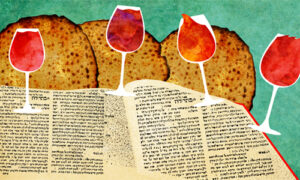
If there are aspects of the Passover Seder from which all people can learn, how much more so is this true for believers in Messiah? After all, our Master Yeshua chose the wine and the matzah of a Passover Seder to represent his body and blood. More than just learning about and celebrating the concept of freedom from oppression and exile, for disciples of Messiah, the seder celebrates Yeshua’s atoning death and resurrection while remaining firmly grounded and centered on God’s deliverance of the Jewish people from Egypt.
Gentiles being drawn to the God of Israel is a significant and beautiful part of this grand plan of redemption as we long for the even greater exodus that will come in the Messianic Era (Jeremiah 16:14-15). Rabbi David Fohrman writes:
The Exodus, as it actually happened in history, did not accomplish everything it might have. There is work yet to do to complete its unrealized vision. The procession that departed Egypt was a shadow of what it might have been. It will be the destiny of Jew and Gentile to one day realize the promise of that journey as it should have taken place: to march side by side and join hands, proclaiming in unison the oneness of a Father they both share.

The Restaurant
“While it is true that at the present time a majority of believers in Yeshua are Gentiles – a fact we celebrate! – Yeshua is truly the Jewish Messiah. Faith in Yeshua cannot make Jews into Gentiles.
Allow me to illustrate this idea with a story about a Jewish restaurant (the Bible), the food it served (Yeshua, ‘the Bread of Life’, John 6:35), and the mostly Gentile neighborhood where it was located (the world).
So what do we do with these texts that are still in our Christian Scripture? We don’t dismiss them. We situate them historically as I have done here — as a reflection of one claimant to the legacy of Israel clawing for space against another.