By Enedina Guerrero
In Matthew’s account of Yeshua’s earliest years, he highlighted two sets of people whose opposing motives and actions deeply impacted Yeshua and His family’s life, as well as history at large. On one side stood Herod—a restless man threatened by uncertainty, who was assigned to be king by one of the strongest empires in history. On the other side stood the Magi—mysterious travelers from the East, laden with costly gifts, who arrived in Jerusalem with eager questions about the location of the newly born King of the Jews, after having patiently awaited the signs of G-d’s timing for His birth. When we slow down and look closely, we see that Matthew 2 is not only a birth narrative, it is also a study in character.
Herod the Great: A King Who Never Felt Safe
The Herod of Matthew 2 is the ruler known in history as Herod the Great, a Roman-appointed king who ruled Judea from approximately 37– 4 BCE. His reign was politically impressive and personally unstable. From a young age, Herod learned how to survive in Rome’s world, meeting and forging bonds with very powerful Roman leaders of that time. Yet in Judea, legitimacy mattered. Bloodlines mattered. Covenant mattered. In an attempt to legitimize his reign, Herod married Mariamne, a Hasmonean princess. Regardless, his position was always complicated because he was not a son of David. As an Idumean whose family was forcibly converted to Judaism under the Hasmonean rule,¹ many of his subjects did not view him as a natural king.
That tension helps explain Matthew’s brief comment in verse 3, which carries so much weight: When Herod heard about a newborn “King of the Jews,” he became agitated. The Magi’s question was not inconsequential to him. It touched a raw nerve pertaining to his authority and identity.
With this inquiry, Herod’s world began to crack and crumble. He had always held firm in the fact that he was a man of the world, connected with various cultures outside of his own. Even his name hints at the cultural diversity of his world. “Herod” comes from the Greek Hērōdēs, which is related to a “hero” and an “ode” or song; it is often defined as “song of the hero.”² In addition, he was not simply a “king” in the abstract. He was a king installed and recognized within Roman political structures. However, that kind of power could be insecure because it depended on the approval of other powers. To make matters worse, having a rival appear, especially one whose origin was rooted in prophecy, caused the threat to feel existentially debilitating to Herod.
Matthew depicted Herod reacting as a ruler who couldn’t afford surprises. He summoned the chief priests and Torah teachers and asked them where the Messiah was to be born. This is an interesting situation, as Herod was willing to consult the Jewish Scriptures, but he wasn’t willing to submit to them. He used sacred Scriptures only as a means for “intelligence”; it became a tool, not a guiding lamp.
Bethlehem and Prophecy: Information Without Worship
Because of the cruel streak in Herod’s character that accompanied his mental instability, the religious leaders fearfully answered him with known facts instead of with a spiritual connection by pointing to the prophetic promise connected to Bethlehem. The prophet Micah spoke of a ruler emerging from Bethlehem, a small village among the clans of Judah.³ The leaders knew the text, but the Magi sought to understand it and looked for signs to guide them to the designated place. This isn’t a small pastoral detail. Many people under duress can hold correct intellectual information about G-d, but still be far from Him in posture. Herod’s posture was not one based on humility; he sought to have total control.
The Magi: Their Identity and What it Meant to be a “Wise Man”
Matthew called Herod’s visitors “Magi.” This term comes from the Greek word magoi, pointing to a recognized class of learned figures from the East that is often associated with priestly or scholarly roles within the Persian world.⁴ In classical sources, the Magi were connected with the Medes as well as with religious duties and dream interpretation. The Encyclopedia Iranica, drawing from Herodotus, describes the Magi as a hereditary priestly clan and notes their influence at court as interpreters and soothsayers.⁵
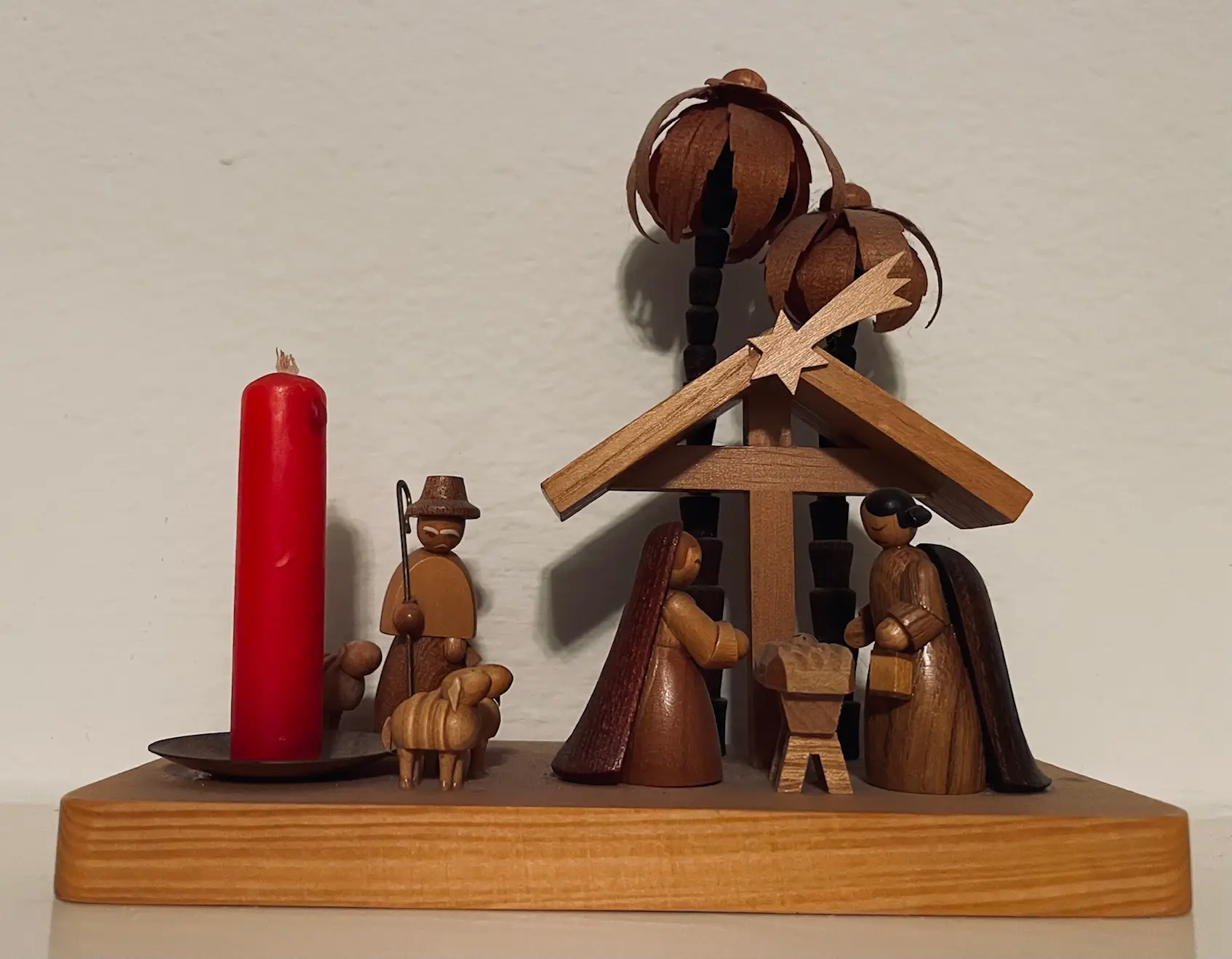
This is important to note because it pulls the Magi out of the animated versions of the various Nativity stories many of us have seen throughout our lives. Matthew didn’t call them kings. He didn’t tell us there were three. He didn’t give their names. What he gave us is their purpose: They came to worship the true King of the Jews. Their study of the heavens somehow intersected with a conviction that a Jewish king had been born.
Over time, Christian tradition filled in the blanks. Around the 700s, the Magi were widely assigned the names Melchior, Gaspar (or Caspar), and Balthasar. By the early medieval period, the Magi were commonly imagined as three kings.⁶ While those names and the Magi’s positions as kings are not found in Scripture, they are the church’s way of teaching the story in a memorable way.
Were the Magi Jewish Sages?
This is a question that often opens up the Jewish context of the Nativity story: If these men came from Media-Persia, could they have been Jewish sages?
Matthew didn’t identify them as Jews. He simply called them Magi “from the East,” which suggests a non-Judean origin.⁶ At the same time, it’s historically plausible that Eastern scholarly circles could’ve had contact with the Jewish Scriptures and the Jewish hope in the Messiah. Here’s why: Jewish life didn’t only exist in Judea. After the Babylonian exile, many Jewish communities remained in Mesopotamia and Persia, forming a long-standing Diaspora presence.7 That means the East had Jewish neighbors, Jewish teachers, and Jewish texts circulating within reach.
Daniel presented a particularly interesting bridge. In Daniel 2, the Babylonian king, Nebuchadnezzar, elevated Daniel and placed him as chief over the wise men of Babylon.8 This suggests that a Jewish leader was positioned within a Middle Eastern court setting of counselors and scholars. While we should be careful not to turn that into a straight line that proves “the Magi were Jews,” it does show that Jewish revelation and Middle Eastern scholarly life intersected in real history.
So, were the Magi Jewish sages? We may not know if they had a Jewish identity; however, they were influenced by Jewish teaching. They were scholars who learned Israel’s Scriptures through Diaspora contact, through court history, through shared intellectual networks, and through the lingering impact of figures like Daniel. In that sense, they may represent something Matthew wanted us to notice: Israel’s Messiah was recognized not only by nearby shepherds, but also by learned men from far away who had enough foresight to seek heavenly signs to begin their journey.
Two Responses to the Same Messiah
When the Magi arrived in Jerusalem, they asked a simple question: “Where is the newborn King of the Jews?” After hearing this and receiving counsel from the chief priests and Torah teachers, Herod plotted to remove the imminent threat by sending the Magi to find the child, cajoling them to return to him with the news of the child’s exact whereabouts, so he could bow down to Him as well. Once they’d found the child and completed their mission, G-d commanded them in a dream to not return to Herod. So not only did the Magi actively pursue worship, but they also were sensitive to G-d’s guidance.
Herod’s story lives on as a warning. His life testifies to what happens when power is treated as the ultimate pursuit in life, only to be threatened by G-d’s purposes. The Magi offer a different picture: seekers who bring their best, bow low, and obey G-d’s leading without questions or hesitation.
This is why the characters matter. Matthew wasn’t only telling us what happened. He gave us an invitation to locate ourselves within the story. When the Messiah disrupts our plans, do we tighten our grip like Herod, or do we loosen our hands like the Magi?
If we are trying to cultivate our confidence in the Bible through its in-depth meaning, this passage definitely rewards patient study. It reminds us that the birth of Yeshua was anchored in real political history, real Diaspora realities, and real prophetic expectation. It also reminds us that G-d often draws the hungry heart from the most unexpected places.
Footnotes
- Perowne, Stewart Henry. “Herod: king of Judaea.” Encyclopedia Britannica, updated Dec. 4, 2025.
- Author Unknown. “Herod.” Behind the Name.
- Micah 5:2 (New International Version). Found at: BibleGateway.
- Waxman, Olivia B. “Here’s What History Can Tell Us About the Magi.” Time Magazine Online, updated Dec. 29, 2020. Found at: TIME.
- Dandamayev, Muhammad A. “Magi.” Encyclopaedia Iranica, Updated Nov. 21, 2015.
- Multiple Authors. “Biblical Magi.” Found at: Wikipedia.
- Britannica Editors. “Jewish Diaspora.” Encyclopedia Britannica, updated Nov. 5, 2025.
- Daniel 2:48 (New King James Version). Found at: BibleGateway.