By Enedina Guerrero
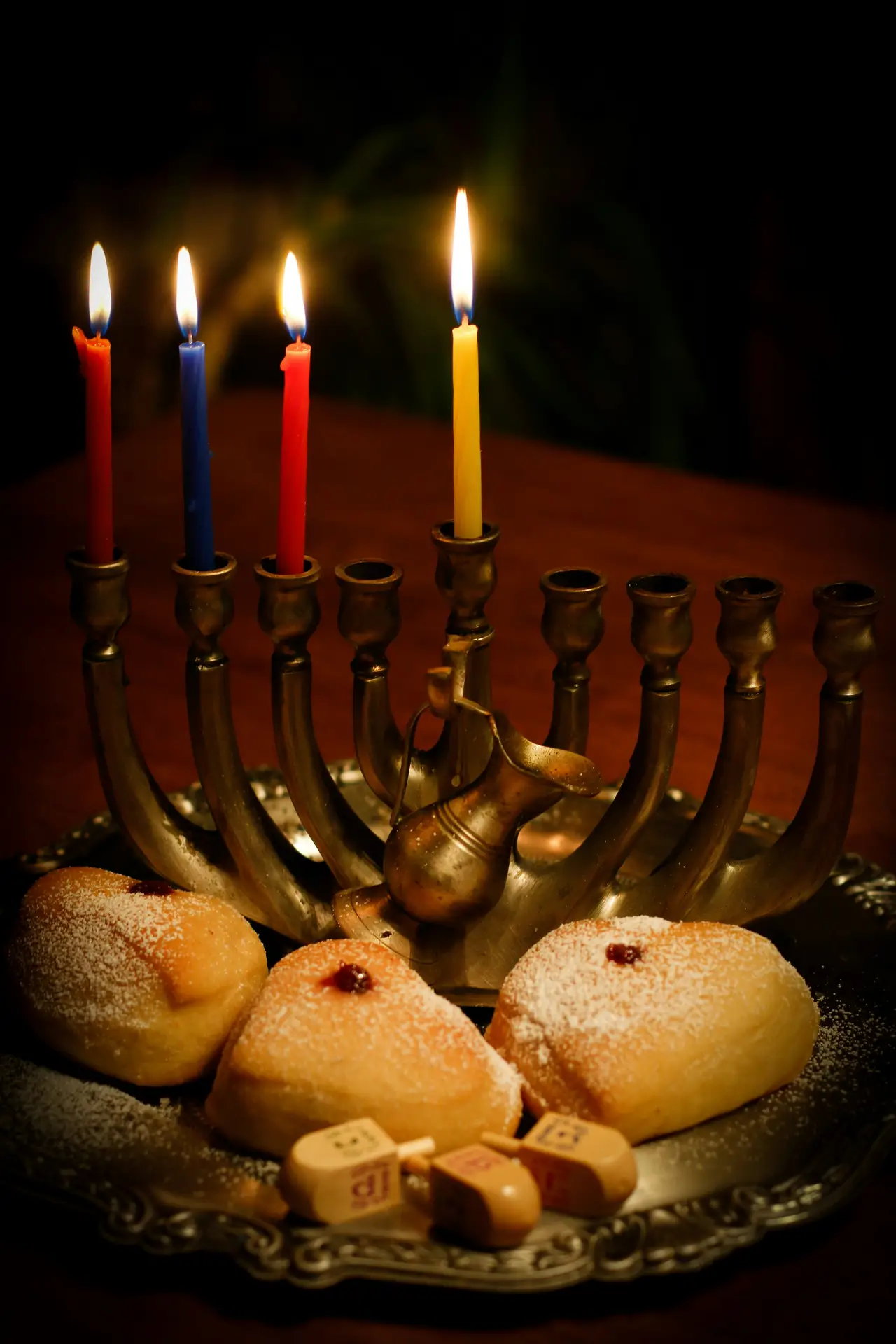
With December finally here, preparations for Christmas have gone into full swing—hanging lights, buying gifts, participating in local activities, and planning festive meals for office or community gatherings. Yet, in the midst of all the Christmas festivities, many tend not to notice a very significant holiday that we, as Christians, should explore, especially since the Jewish roots of our faith help us to obtain a deeper understanding and connection to our beliefs. That holiday is Chanukkah, a festival that not only commemorates a historical victory but also enriches our Judeo-Christian heritage.
Historical Context
After Alexander the Great’s death, his generals divided his vast empire into four territories. Cassander took over Macedonia and Greece. Lysimachus acquired Thrace and parts of Asia Minor. Ptolemy took control of Egypt and Israel, while Seleucus reigned over the East, including Syria. During Ptolemy’s rule, significant cultural exchanges occurred, including the translation of the Hebrew Bible into Greek, known as the Septuagint. This act, although politically motivated, made the Jewish Scriptures accessible to the Hellenistic world.
The Hellenistic Challenge
A little over a hundred years later, the Seleucids seized control over Israel from the Ptolemaic dynasty. The cultural and religious imposition by the Seleucid Empire, particularly under Antiochus IV Epiphanes, threatened the very fabric of Jewish identity. He attempted to force Jews to assimilate into Greek culture by prohibiting Sabbath observances, festivals, circumcision, etc., severely oppressing the Jewish people. His regime went so far as to desecrate the Holy Temple in Jerusalem by installing a statue of Zeus in the sanctuary and sacrificing pigs on the altar. This was a profound violation of and affront to Jewish law and spiritual practices.
The Maccabean Revolt and the Significance of the Miracle
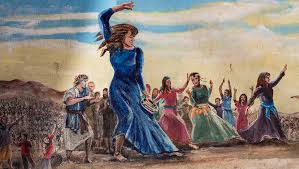
In response, the Hasmoneans, a priestly family led by Mattathias, initiated a revolt. Shortly thereafter, Mattathias died, leaving his son, Judah the Maccabee, to lead the rebel army. Their rebellion focused less on national independence and more on religious freedom. The Maccabean army, bolstered by their faith in G-d, presented a strong, unified stand against forced Hellenization and the erasure of Jewish customs.
After a grueling three years of fighting, Judah and his army recaptured Jerusalem and the Holy Temple from the Greeks. This is the birth of what we now know as Chanukkah. Although we know this Jewish holiday traditionally focuses on the miracle of the oil— where a single day’s supply lasted eight days, symbolizing divine intervention and renewal—there were other miracles that took place in the events leading up to the Temple’s cleansing and rededication. Take a moment to reflect: A small band of pious Jews successfully fought in guerrilla-type warfare against a highly trained and experienced Greek army. While we don’t have the actual numbers, it’s estimated that approximately 12,000 Jews defeated the well-armed Greek army consisting of up to 40,000 soldiers. In profound gratitude to G-d, the Court of the Hasmoneans established an annual eight-day feast to commemorate the miracles that transpired during the war with the Greeks, up to that point. They named this feast Chanukkah (“dedication”) because it originally celebrated the rededication of the Temple and the altar, which the Greeks profaned with unclean sacrifices. Although many feast days to commemorate the various triumphs of the Maccabees were in vogue at that time, only Chanukkah—with its lights and singing of praise—continued to be celebrated throughout the last two millennia, highlighting themes of faith, resilience, and the light of truth triumphing over the darkness of tyranny.
Relevance to Christians
For Christians, commemorating Chanukkah serves as a reminder of our shared heritage with Judaism. It fosters a spirit of unity and mutual respect between our two intertwined traditions by acknowledging the common values of faith and perseverance in the face of adversity as well as the shared themes of hope, miracles, and the fight for spiritual integrity. We know, from John 10:22, that Jesus Himself knew of Chanukkah’s rich significance and observed its traditions in the Temple in Jerusalem. He set the example for us to follow. By embracing Chanukkah as He did, we are encouraged to stand steadfast in our faith and values in the G-d of Abraham, Isaac, and Jacob. Although there is no evidence connecting the date of Chanukkah, the 25th of Kislev, to the Early Church’s choice of December 25th as the date of Jesus’ birth, they remain as clear reminders of the days in which G-d decided to reveal Himself to the world.
Resources:
Spiro, Ken. “The Revolt of the Maccabees.” Simple to Remember: Judaism Online. Found at: https://www.simpletoremember.com/articles/a/the_revolt_of_the_maccabees/
Bader, Gershom. The Jewish Spiritual Heroes, Volume I. New York, NY, 1940.
“The Four Successors of Alexander.” Bible Hub. Found at: https://biblehub.com/topical/t/the_four_successors_of_alexander.htm#:~:text=The%20Four%20Kingdoms,of%20Hellenistic%20culture%20and%20learning
Rosenthal, Marv. “Why Do We Celebrate Christmas on December 25th?” Israel My Glory. Found at: https://israelmyglory.org/article/why-do-we-celebrate-christmas-on-december-25th/?hilite=chanukkah