
By Enedina Guerrero
Growing up, I marked time by the calendar hanging in our kitchen, which had little red numbers indicating special days, such as Thanksgiving and Christmas. These were important, festive days filled with meaning that, at times, provided a day off from school or work. After becoming a believer, I continued observing the holidays on the calendar. But it wasn’t until decades into my faith journey that, much to my surprise, I discovered G-d has His own calendar that’s been inscribed in Scripture all along, just waiting to be acknowledged by its readers.
In Genesis 1:14 (The Westminster Leningrad Codex [WLC]), G-d established the sun and moon “for signs and for seasons.” The Hebrew word translated as “seasons” is moadim, which literally means “appointed times” or “divine appointments.” From the very beginning of Creation, G-d built into the rhythm of time itself specific moments when He would meet with His people. These aren’t just Jewish holidays or cultural traditions. They’re the LORD’s appointed times (Leviticus 23:2), and they belong to Him.
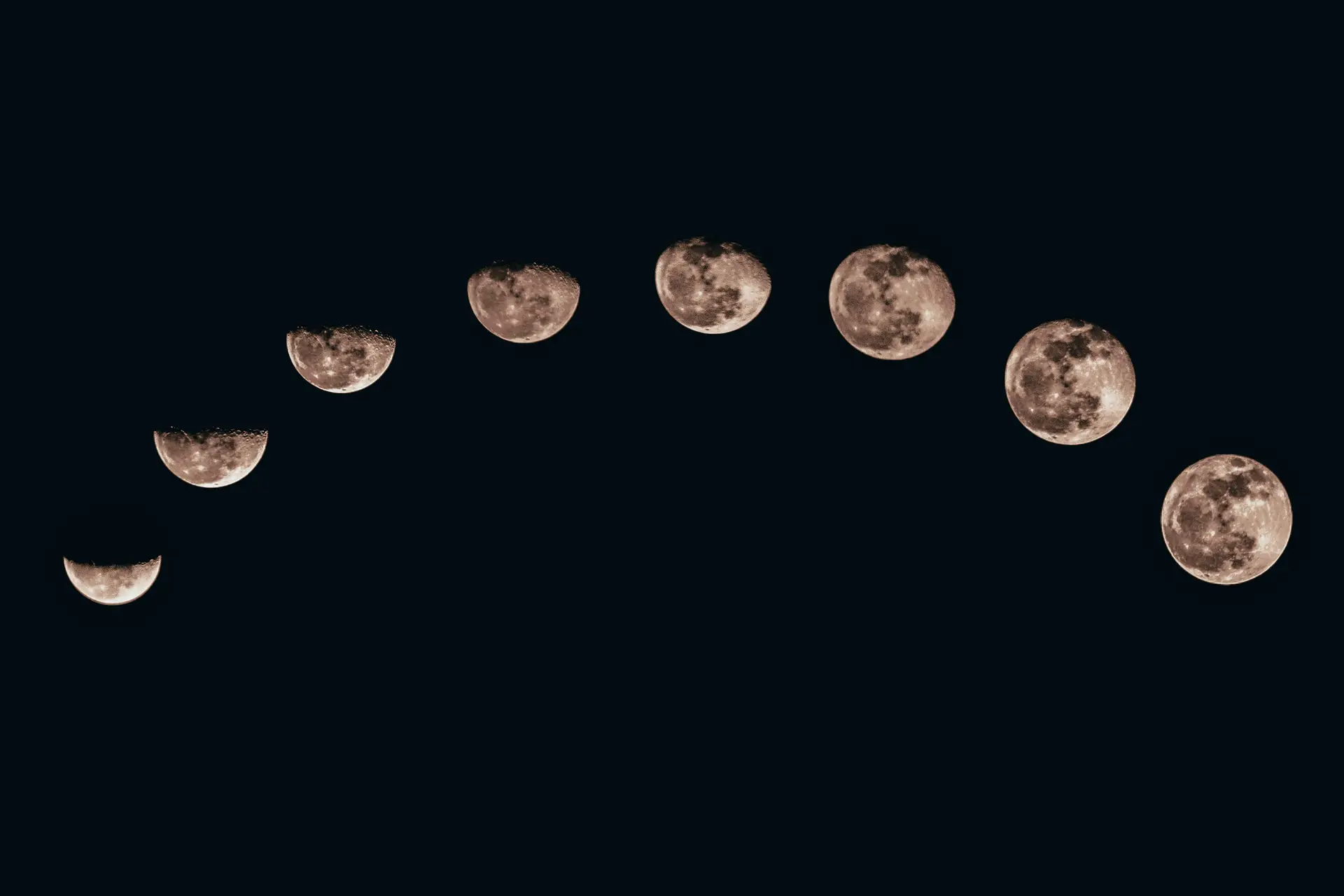
The Jewish biblical calendar utilizes the lunisolar concept. It follows the lunar cycle in terms of the number of days in a month and the order of months. However, it is also aligned with the seasons of the year, which are governed by the sun, by utilizing leap years, so that it will keep the Moadim in their proper seasons.1 Its use and focus were on the land of Israel and its agricultural cycles. In earlier times, the Jewish High Court (Sanhedrin), in Jerusalem, was tasked with determining the beginning of the lunar month and balancing the lunar and solar years. All of this was done through observation. In the fourth century, after the destruction of the Temple and during the continual persecution against Jewish communities, a fixed calendar was instituted. This allowed the Jews dispersed around the world to continue recognizing the Lord’s appointed times.
Why the Biblical Calendar Matters
The Appointed Times are G-d’s way of marking redemptive history. These divine appointments reveal G-d’s character and His plan for humanity. When G-d told the Jewish people to observe Passover, to count fifty days from Passover to Shavuot (Pentecost), and to celebrate the fall feasts of Trumpets, Atonement, and Tabernacles, He was inviting them to meet with Him each time. By doing so, He established a prophetic blueprint that would span from Creation to the Messianic Age.
For our Jewish friends, the biblical calendar has been faithfully observed for millennia. It connects them to their ancestors, to the G-d of Abraham, Isaac, and Jacob, and to G-d’s covenantal promises that remain “irrevocable” (Romans 11:25–29). The weekly Sabbath, the new moon celebrations, and the seven major feasts create a rhythm of remembrance, recalling G-d’s mighty acts of creation, deliverance, provision, and faithfulness.
For Christians, discovering the biblical calendar can feel much like finding a missing piece of a puzzle. For example, we’ve read about Jesus observing Hanukkah when He went to the Temple (John 10:22–23) and Paul rushing to Jerusalem for Pentecost (Acts 20:16), but we’ve rarely asked why these days mattered to them. The early believers, who followed Jesus’ example and that of His apostles, didn’t abandon the Appointed Times; they fully embraced the Jewish Biblical Feasts.
When we align ourselves with G-d’s calendar as they did, we begin to see the Scriptures differently. We understand why certain events happened on certain days. We grasp the prophetic patterns woven throughout redemptive history. We participate in the same rhythm of worship that Jesus Himself observed. And, ultimately, we prepare our hearts for His return by rehearsing the Fall Feasts that await their final fulfillment.
One Calendar, One Shepherd
In John 10:16 (New International Version [NIV]), Jesus said, “I have other sheep that are not of this sheep pen. I must bring them also. They too will listen to my voice, and there shall be one flock and one shepherd.” The biblical calendar is a tool to help us further the goal of becoming “one flock.” Jews and Gentiles together—celebrating the same Appointed Times, honoring the same G-d, and anticipating the same Messianic hope. This isn’t about Christians “becoming Jewish” or Jews abandoning their heritage. It’s about both communities recognizing that G-d’s appointed times are invitations to divine appointments where “heaven” touches earth, where we remember what He’s done, and anticipate what He will do.
The biblical calendar matters because it’s G-d’s calendar. It’s how He chose to mark time, reveal the Messiah, and invite us into His redemptive story. As we learn more about each season and its purpose, the invitation remains: Come to the Appointed Times. Meet with the G-d who has been waiting to meet with you all along, in His divine timing.
Bibliography: Rabbi Shurpin, Yehuda “Why does the Jewish Calendar Follow the Moon”, Ask “Rabbi Y” Found at: https://www.chabad.org/library/article_cdo/aid/5043964/jewish/Why-Does-the-Jewish-Calendar-Follow-the-Moon.htm